
You've changed your diet, eliminated sugar, tried probiotics, and possibly gone through several rounds of supplements. You start feeling better for a while, but eventually, the bloating, digestive discomfort, and irregular bowel movements return. It's frustrating, especially when you feel like you've spent months trying to get your gut health back on track.
When dealing with digestive issues such as SIBO or suspected Candida overgrowth, it's easy to become focused entirely on the bacteria or yeast. However, there are other parts of the digestive system that deserve attention, including your liver, bile production, and how efficiently your intestines move waste through your body.
Each of these systems has a different responsibility, but they work closely together. Understanding those relationships can help you take a more comprehensive approach to your digestive health.
Understanding what's happening inside your gut.
Your digestive tract is home to a diverse community of bacteria, fungi, and other microorganisms. Many of these organisms play helpful roles in digestion, nutrient metabolism, and immune function. Problems can arise when certain microorganisms grow excessively or when they are present in areas where they don't normally exist in large quantities.
SIBO, or small intestinal bacterial overgrowth, occurs when excessive bacteria accumulate in the small intestine. These bacteria can ferment carbohydrates, producing gas that contributes to bloating, abdominal discomfort, and changes in bowel habits. You might notice that even foods considered healthy, such as onions, apples, or certain vegetables, leave you feeling uncomfortable.
Candida is a type of yeast that naturally lives in various parts of the body, including the digestive tract. Its presence alone doesn't indicate a problem. Excessive fungal growth in the small intestine is sometimes referred to as SIFO, or small intestinal fungal overgrowth, and can produce digestive symptoms similar to SIBO.
Although bacterial and fungal overgrowth are different conditions, the symptoms can overlap. This is why identifying what's actually happening is important before deciding how to address it.
Your intestinal environment is influenced by several factors, including digestive secretions, intestinal movement, medications, and the foods you eat. Looking at these factors helps explain why digestive health involves much more than simply eliminating unwanted microorganisms.
Your liver plays an important role in maintaining a healthy digestive environment.
When we talk about gut health, the liver often gets overlooked. Yet this hardworking organ is involved in processing nutrients, metabolizing hormones, and transforming substances so your body can eliminate them.
One of its most important digestive responsibilities is producing bile. Bile travels from the liver into the small intestine, where it helps break down fats and allows your body to absorb fat-soluble vitamins. Bile acids also interact with intestinal microorganisms and help shape the environment within your digestive tract.
Interestingly, this relationship works in both directions. Your intestinal bacteria modify bile acids, which can influence digestion and metabolism. This ongoing communication between the liver and intestines is known as the gut-liver axis.
When people talk about detoxification, they're often referring to processes that your liver and kidneys perform naturally every day. Your liver transforms certain substances into forms that can be eliminated through urine or bile. Some of those substances travel into the intestines and eventually leave the body through stool.
Your liver relies on adequate nutrition, including protein, vitamins, and minerals, to carry out its normal functions. Foods such as eggs, leafy greens, broccoli, cauliflower, and other nutrient-rich vegetables can contribute to a balanced diet that supports liver health.
Adequate sleep, regular physical activity, and limiting alcohol consumption also help maintain healthy liver function.
Keeping things moving is an important part of gut health.
One of the lesser-known factors associated with SIBO is intestinal motility, which refers to the movement of food and other material through your digestive tract.
Between meals, your small intestine has a natural pattern of muscular contractions called the migrating motor complex. Think of it as a housekeeping system that helps move leftover food particles, digestive secretions, and microorganisms farther along the digestive tract.
When this process becomes disrupted, bacteria may have more opportunity to accumulate in the small intestine. This is one reason addressing the underlying causes of impaired intestinal motility can be important in managing recurring SIBO.
Farther along the digestive tract, your colon absorbs water and prepares waste for elimination. When stool moves too slowly, it can become harder and more difficult to pass, contributing to constipation, pressure, and abdominal discomfort.
Supporting regular bowel movements is an important part of maintaining digestive comfort. Drinking adequate fluids, getting daily movement, and finding the amount and type of dietary fiber your body tolerates can all help. If you're dealing with significant bloating, suddenly increasing fiber may make you more uncomfortable, so gradual changes are often easier to manage.
It is also helpful to pay attention to your natural bathroom signals. Frequently postponing bowel movements when you're busy can contribute to changes in bowel habits over time.
Where does colon hydrotherapy fit into the bigger picture?
Colon hydrotherapy uses water to flush stool from the large intestine. People sometimes explore it as a complementary wellness service when they are interested in bowel elimination and digestive health.
Understanding the difference between the small and large intestines is particularly important when discussing SIBO and fungal overgrowth. Colon hydrotherapy works within the large intestine, while SIBO and SIFO occur in the small intestine. Emptying the colon does not eliminate an overgrowth in the small intestine or restore normal intestinal motility.
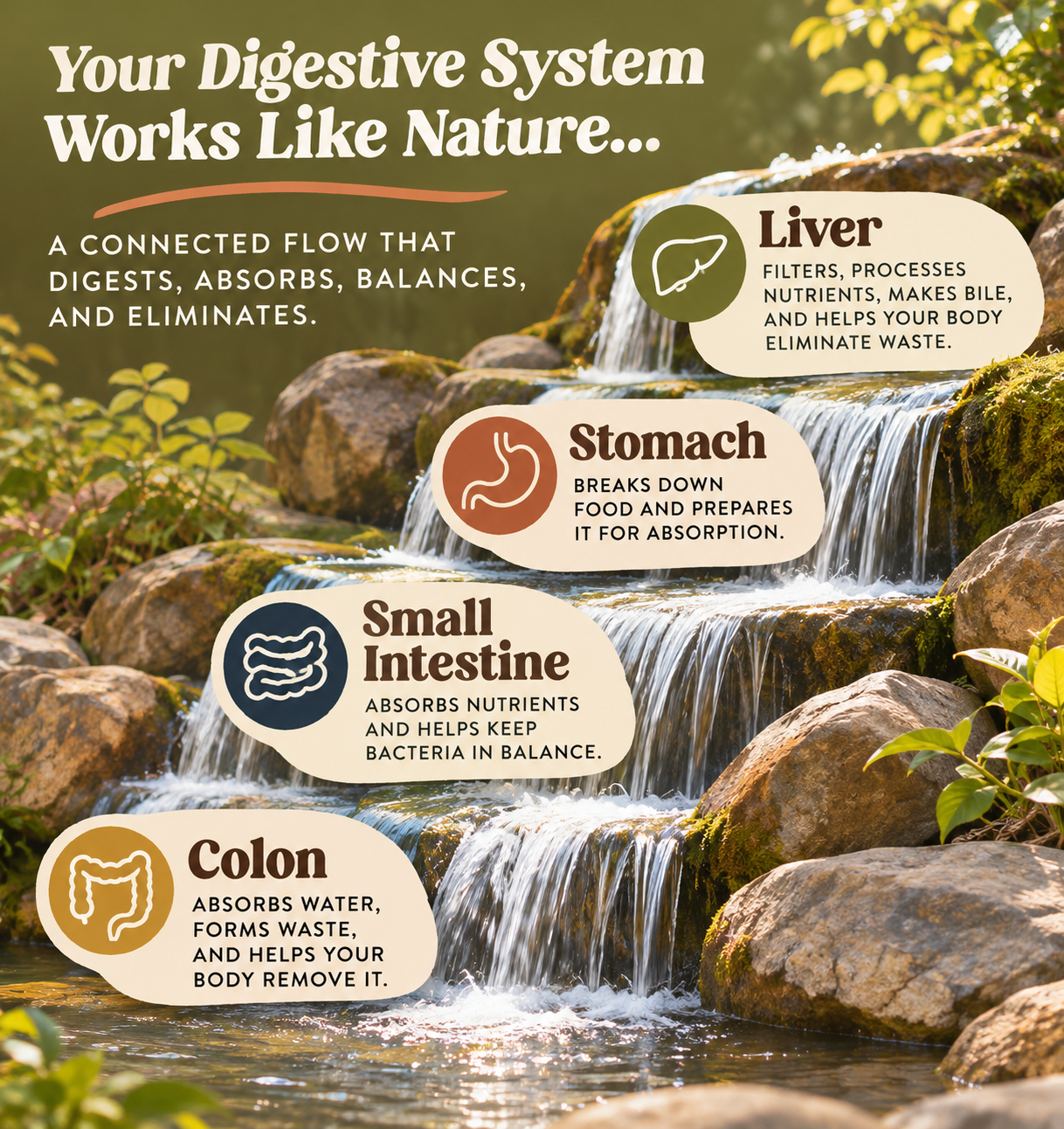
The connection between these topics is the importance of looking at digestive function as a whole. Bowel elimination, liver function, intestinal motility, and the microbial environment each have distinct roles. At Wellness Within, we encourage conversations about digestive health that extend beyond individual symptoms. Understanding how your liver, small intestine, and colon work together can help you become more intentional about the everyday habits that influence digestion.
Start by looking at your meals, hydration, sleep, movement, and bowel habits. Notice which foods leave you feeling comfortable and which ones seem to contribute to digestive discomfort. Give your body consistent nourishment and hydration rather than jumping from one restrictive cleanse to another.
Digestive health involves many moving parts, and each deserves attention. When you understand the responsibilities of your liver and intestines, you can begin building a routine that supports their natural functions and creates a stronger foundation for your overall health.